
I recently got to contribute to one of my favorite Italian food/travel/culture publications Appetito Magazine (helmed by Andrew Cotto, amazing author of Cucina Tipica: An Italian Adventure) and share my thoughts on something that has recently changed my view of Italy as a whole.

Consciously or not, I have made exploring Italy through food my life’s ambition. Born of Italian parents and fortunate to have two passports, I ping pong between Italy and the U.S. as much as I can, usually for the main purpose to eat, or as I tell people, to “explore and educate myself on the culinary and epicurean traditions of Italian culture”.
It is an exhausting practice but one I think many people also bear the burden of willingly, and so commiserate often publicly in the comment section anytime I post a picture of me abroad with something delicious on my plate. If you are one of us, you know well that the more you dive into food travel, the more you discover, and there seems to be no end to the rainbow.
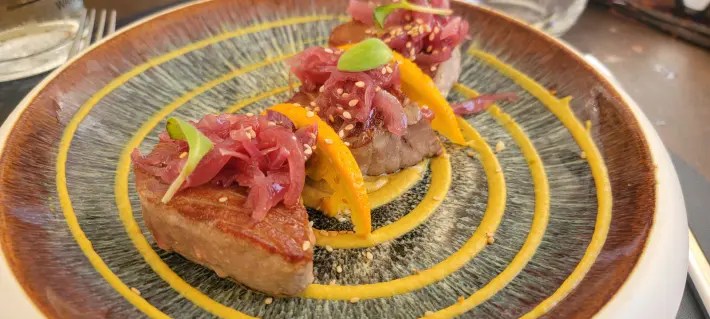
I know this personally having done full scale documentaries on rare Italian Cookbooks, the art of the Porcini hunt in Tuscany, and even a film about the most dangerous pasta in the world, Penne Alla Vodka, which, and I can’t believe this myself, is being developed into a television series. When it comes to random culinary exploration, I figure myself well versed, but recently discovered something that I never even considered that has changed my perception completely of my beloved Italian cuisine. In a word: Kosher.
Yes, Kosher. Let’s start off by saying that I am not Jewish. I am in fact not anything, and do not subscribe to any particular belief system, the main reason being that I find it easier to move around the world and open more doors (and stomachs) if there is no possibility of breaking a moral rule. Speaking of rules, Kosher has quite a lot of them. Coming from an agnostic background and learning what goes into certifying that a consumable item is in fact Kosher is a massive undertaking (not to mention a 42 billion dollar industry). When it came to Italian food however, I never even considered how Kosher food plays into it, but discovered that it is not only a huge presence in Italy, but a fascinating one as well. Let’s begin.
How this door opened was a simple email from a company called Tuscanini, who happens to be the largest producer of Italian Kosher products in the world. They had seen the film work I had done and wanted to know if I would focus my attention on Kosher products produced in Italy. Of course I jumped at it, considering it would be a project that would bring me from Modena to Messina over the course of two months doing what I love to do; filming (and eating) Italian food.
I did not expect to discover a world within a world as I did. Take wine for example. At Terra della Seta vineyard I met with Daniele the owner who explained to me the tremendous undertaking in producing not just your basic Chianti Classico, but a Kosher Chianti Classico to boot. “First there are dozens of fixed rules that you must adhere to to make a real Chianti Classico,” He explains to me, almost with a quiver in his voice recounting the daily toil he goes through. “Chianti is a DOC (Denomination of Controlled and Guaranteed Origin) controlled product meaning the grapes used must be 80% San Giovese and come from a very specific region here in Italy. The vines must be cultivated in specific ways, the planting densities, location of vines, the slope of the hills, the dampness of soil, all this is highly controlled in order to say it is a Chianti Classico. There are literally 49 articles of regulation we must follow just to make one bottle of wine.” He pauses for a second to take a deep breath and reset, then quietly says, “from here, we still have to make it Kosher, which is a process even more demanding if you can believe it.”
Honestly, I cannot believe it. Producing wine and getting the little black rooster on your bottle is no small feat, considering there are only 289 vineyards permitted to make Chianti Classico in a world with easily over 100,000 vineyards. Yes, that’s .3% of all wine produced. Then, when you consider what goes into making it Kosher, it gets real fun.

First, you need a mashgachim, which is a specialized representative that overlooks the entire process of wine making, and I mean the entire process. From cultivating, to harvesting, to crushing, to fermenting, only the mashgachim can physically touch the product, and in some cases, be in the room while it happens. This means you need not just a person with the understanding of kashrut laws (which govern how something is made Kosher) but also someone that knows how to make excellent wine, and this is not easily done. Kosher wines in general have to be produced completely naturally because certain enzymes typically used to help wine production can contain chametz which are not allowed in Kosher products. From here the wine must be sealed by the Rabbi with a lock so that it is impossible for anyone to tamper with it. Then it is bottled in a special, separate location, also regulated by the mashgachim, at which time it is allowed to reach the public for consumption.
“So imagine having a thousand very difficult rules to follow to make a bottle of wine,” Daniele says, “then imagine compounding each of those rules just to make it Kosher. It is a huge undertaking that requires not just an amazing amount of skill, but dedication and passion.”

This is really where the perspective shift came in for me. I, like I believe most people, gravitate toward Italian culture and cuisine because you can literally taste the passion and respect they have for what they produce. It is a culture that over millennia has curated what it means to eat and live well, and the product is undeniably excellent since it is celebrated worldwide. When you add in a Kosher quotient, you are adding passion on passion. It is a different culture that also for millennia has been refining its process through dedication and curation. It is almost absurd to think about combining these two sets of quality onto a single product and having it be viable for production, but it happens, and not just with wine.
In our series we went to Rome to talk with Kosher chef Giovanni Terracina and Ceserine Ofelia Sisca who showed us how to make handmade farfalle and gnocchi that was absolutely delightful. In Puglia we visited Olearia Clemente to walk among the millennia old olive groves and discuss what goes into producing the world’s best (Kosher) olive oil. In Trapani we visited the Borrometi family and their positively ancient sea salt mine, which has been producing salt since the time of the Phoenicians. In Modena we visited the Monari family where they have been making Balsamic there since the time of the Romans. Finally we visited the idyllic island of Favignana and talked with local legend Salvatore Spataro who is keeping the century old tradition of Mediterranean Tuna fishing alive, which produces a very special cut called the ventresca which is unlike any other.
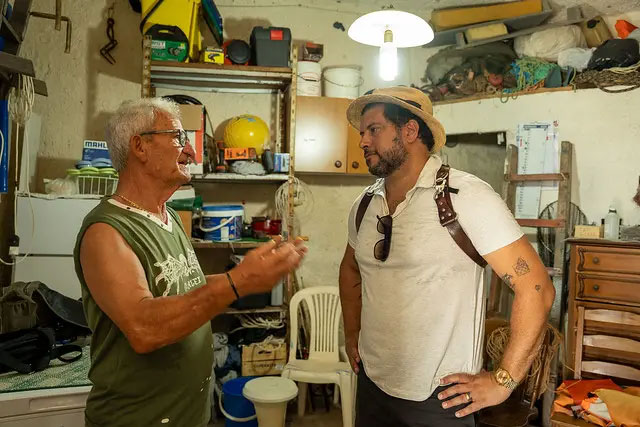
Each one of these isolated products has taken literally thousands of years to perfect, on top of which strict regulations dictate how the products have to be made in order to call them authentic. Now consider the additional care taken when Kosher rules are applied to each of these amazing products, and you start to realize there is an entire class of food that I personally had never even considered. It’s a bit mind blowing.
I’m sure you are asking “but are they … better?” which is something I was curious about myself. The best way I can describe it is how do you improve on perfection? Certain native Italian products generally are superior to anything you find produced in any other country, so making them Kosher doesn’t seem to change the quality empirically for better or worse. However, learning about the extreme passion that goes into making them Kosher, and the drive these artisans have to see that through, definitely influences their quality to me. I find myself savoring each bite a bit more, knowing the extreme difficulty, passionate care, and thousands of years of culture that had to go into every morsel.
It really goes to show that no matter how dedicated you are to something, there is always another bite deeper you can take. That truly makes me hungry to discover what else I haven’t tasted yet out there in the world.
—
Roberto Serrini is a professional director and documentary filmmaker that has worked with the largest global brands in the world to bring their vision to life. His new food/travel series called “Tasting Italy with Roberto Serrini” is produced by www.no-frames.com in partnership with Tuscanini Italian Foods, and is currently on a festival tour, each episode being released weekly on TravelClast YouTube Channel.
 The TravelClast