
As of late I’ve been in a crisis. The work I do as a travel journalist has become cancerous. When I started, which was before cell phones, before internet, when photographs were on celluloid and your knowledge came from people on the streets, travel writing was a different beast. It was a way to inspire the world to get out there and discover the unknown corners of the world. Those corners are now gone. Only listicles with “Best” in the title run rampant online, and the work I so loved now has become my curse. I seem to only add to the noise, destroying the one element of life I found to be truly rewarding: travel.
So I have been diving deep into the question of what to do. How do I continue to write and craft films about travel without adding to the cancerous machine that is over tourism? How do I continue to inspire without flooding one place with a human avalanche and destroying the delicate balance of nature? Is it even possible to do?
Enter the Chris Marker.
Chris Marker is someone I have known of for years. As a Film Theory student we studied his seminal work “La Jatee” in nearly every class. If you are unfamiliar it is a photo-film dealing with the concept of time travel, or, if you have ever seen the film 12 Monkeys it’s that, just made in 1962 and about 25 minutes long.
It is not a travel film (unless you consider time travel a destination and therefor a tourism film). It is strange and wonderful and completely ahead of it’s time and something to marvel at from a film theory standpoint. What I had no concept of was that our French friend Chris Marker was actually a travel filmmaker in disguise. Enter A Valparaiso:
It may look like a documentary or even an experimental art film but this to me is the most brilliant, delightful, poignant travel film ever conceived. It never uses that dirty four letter word “best”. It doesn’t talk about the food, or an instagrammable wall, or where the Kardashians went to buy a bag. It instead packages a place, in this case the Chilean city of Valparaiso, in a beautiful little frame and lets the viewer live there in perfect 4:3. The tone of the film is poetic but sterile. The images are hauntingly esoteric but also raw and journalistic. To me it gives a beautiful, unassuming look into destination not from the position to convince the viewer they must go, but rather in a much more laissez-faire French take it or leave it.
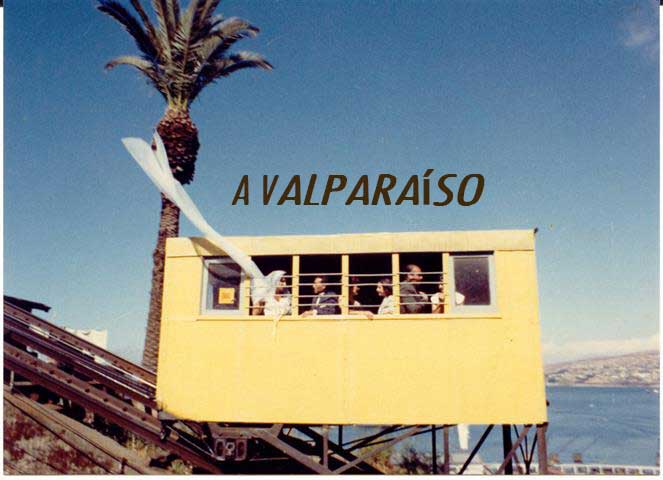
It was a revelation finding this gem, and amazing how this time capsule can reinvigorate a passion that I thought was terminally gone. It would seem that Marker made another type of time travel film, this one for a genre of journalism that seemingly also killed itself through it’s own success. A strange “Looper” situation that seems all too fitting to be just coincidence.
 The TravelClast