
What’s frightening is I haven’t stopped creating long enough to ever have time to reflect over what, if anything, I have accomplished. I don’t say this as a humble brag, it’s not, it’s a condition that I found came with my chosen career of working in media, and speaking at the University of Georgia made forced me to come to terms with just that.
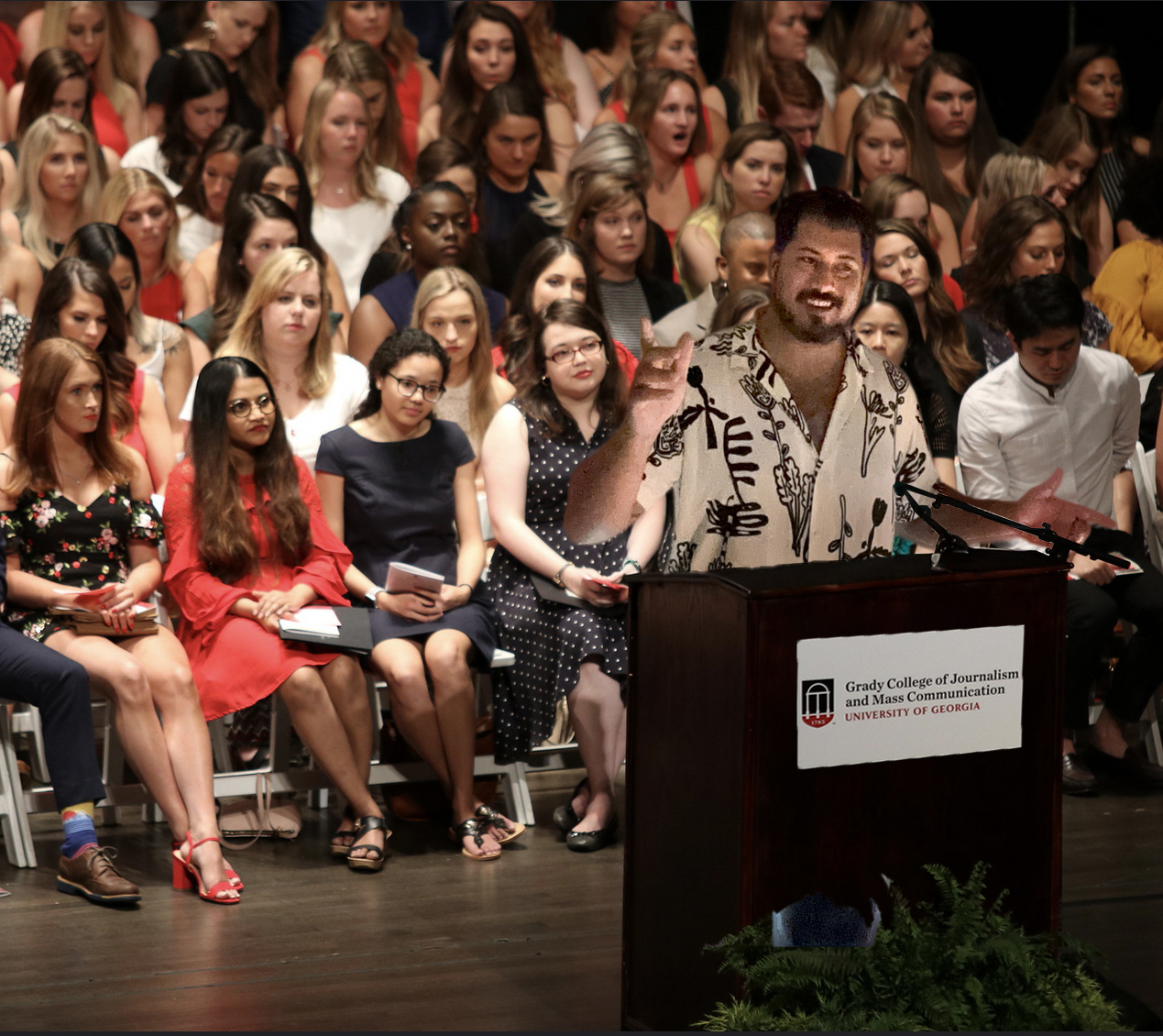
I say working in media with hesitation as I don’t fully know how to define what I do. I remember what I got a degree for, Film Theory, which is about as vague as what I do now. Over the course of two decades I have worked on sets as a PA, in Art Departments, as a screenwriter. I have been all shades of an editor, from assistant to post producer, and have shot all sorts of things from underground nightlife in NYC, to travel and food shows, to multi-million dollar commercial campaigns. So … what am I?
I produce an excessive amount of content over the year to satisfy my overactive need for feeling worthy of the life I live. Between the multiple short documentaries, online content, and dozens of commercial campaigns, I offer them all up for a chance to win some sort of award out in the wild. Last year a project I did with the amazing Erin Judd, EP of No Frames Productions, was one such project. It was a branded travel and food series for Tuscanini called “Tasting Italy”, and it was rife with production disasters that ultimately led to delivery gold. Bottom line is we were very proud of what we pulled off, and many festivals thought the same, including the illustrious Taste Awards, which we won two last year for Best New Food and Travel Series and the premiere RB Cellars Award for Best Branded Content. Yes, we’re proud of this.
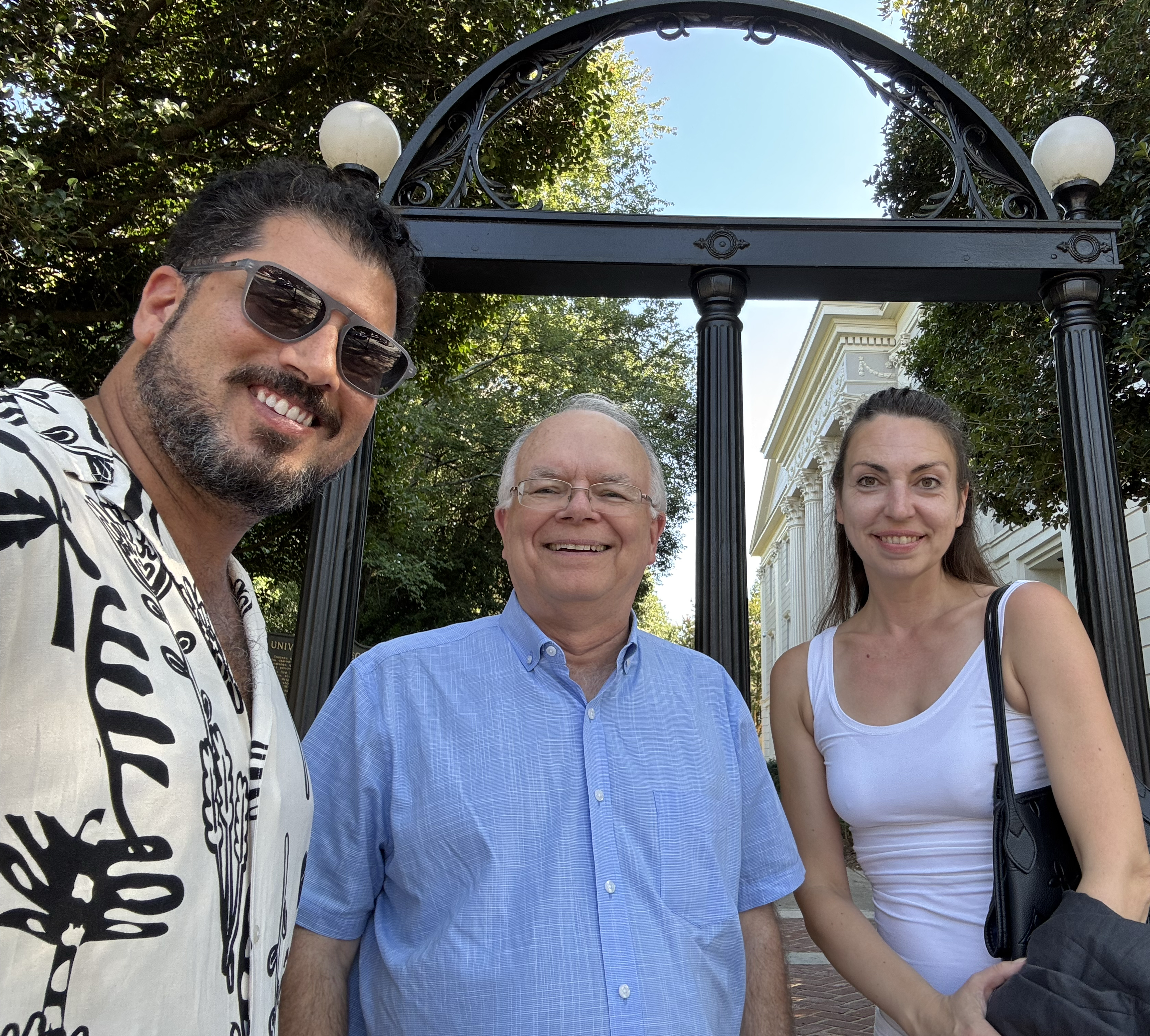
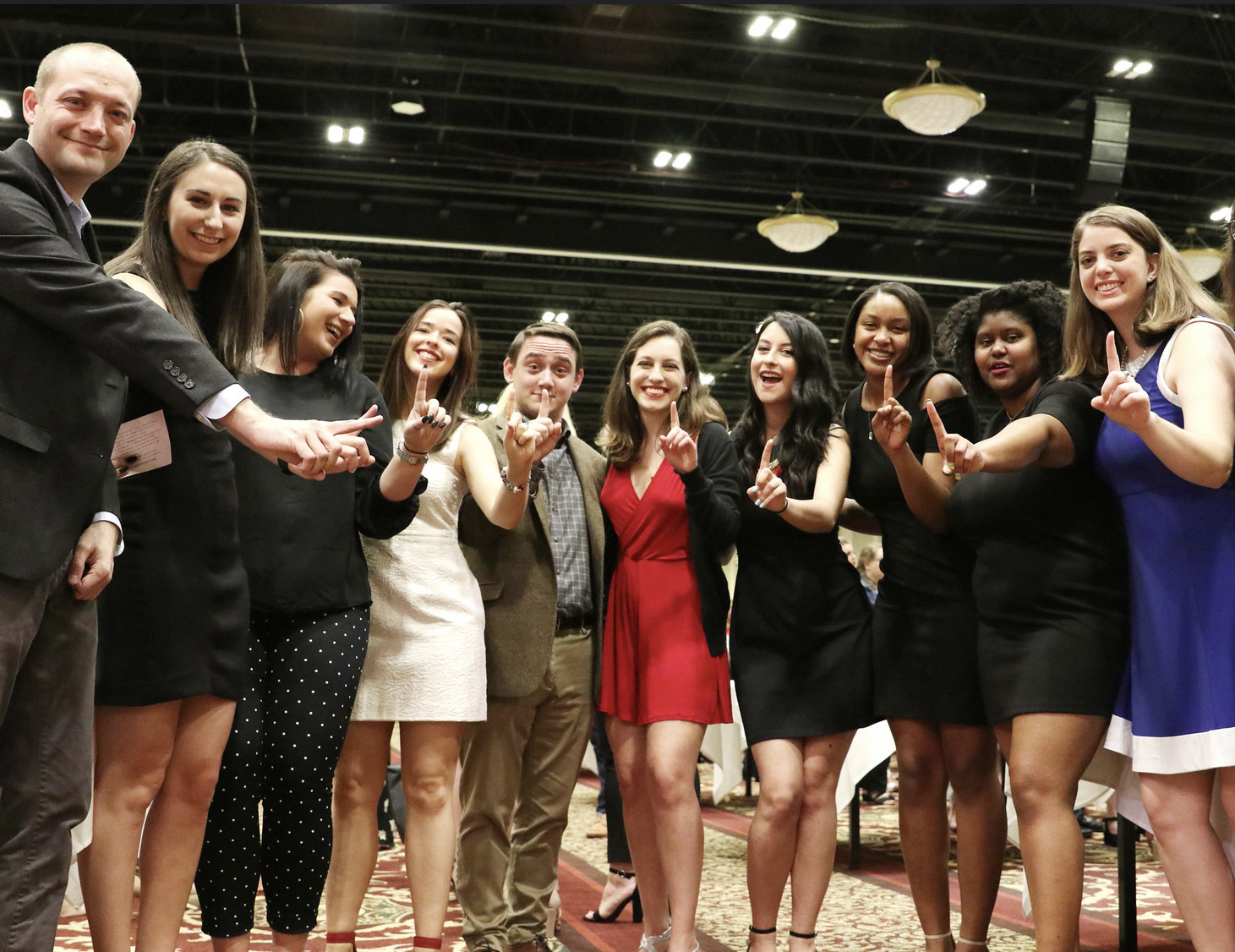
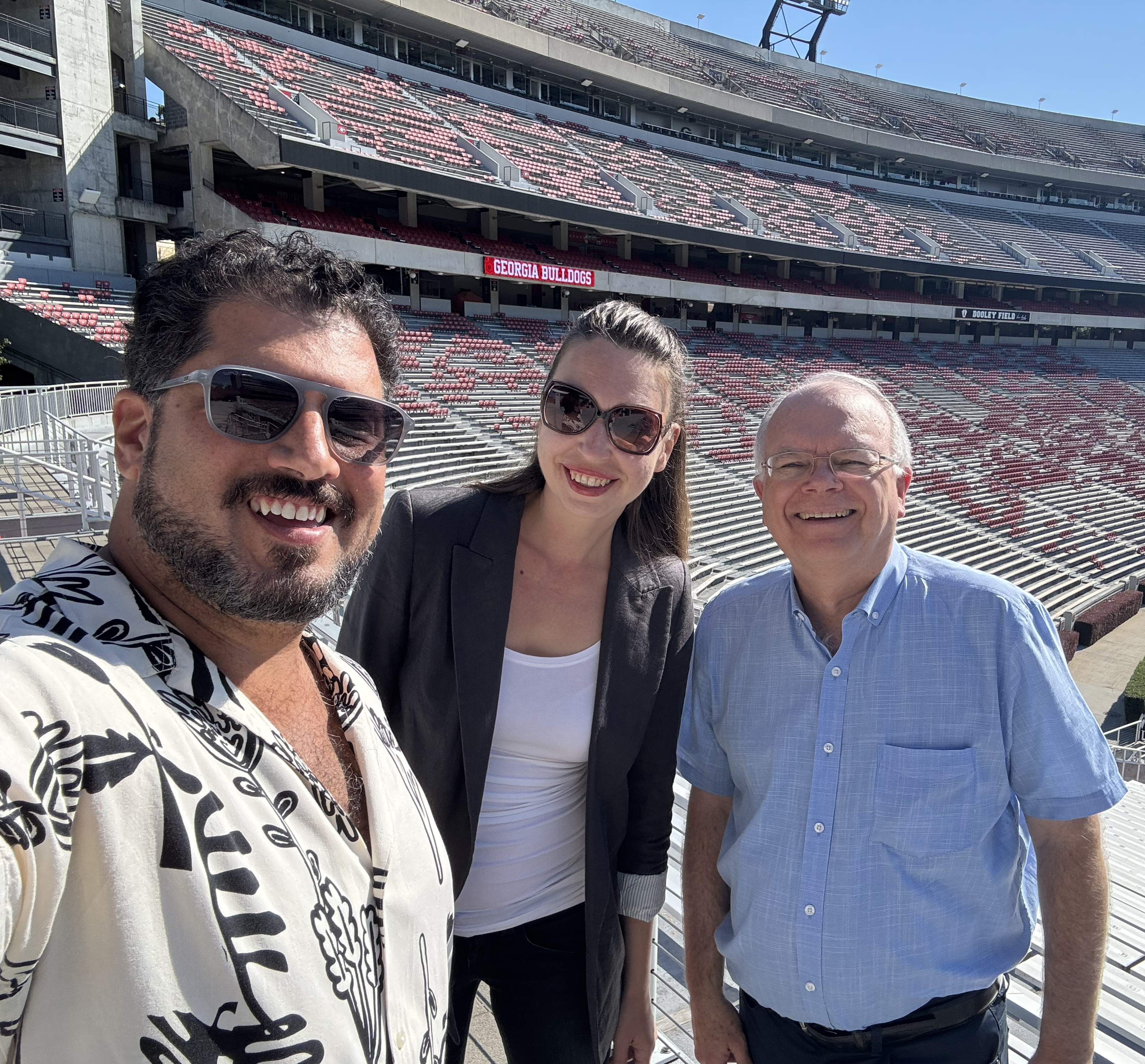
At the Taste Awards we met another two big winners, Dr. Keith Herndon and Charlotte Varnum who won for their amazing podcast “Wines We Drink”. Well, food and wine going hand and hand we made fast friends, at which time Dr. Herndon, who is the Chair of News Strategy and Journalism at the University of Georgia casually invited us to come down and speak to his classes about what we do.
It was an incredible honor, something that weighed a bit on my head leading up to our arrival on campus. For once I had to think “what do I do?” and it was a daunting, illusive question.
The main culprit is two fold; one, knowledge has flourished over last two decades. No longer are guilds able to gate-keep professions from the general public. Hell, even the most armature creative has a powerhouse of production capability in their pocket at any moment. Second, media has evolved to something that is almost amorphous. It is no longer just a 30 second broadcast standard spot. I don’t remember the last times I had to worry about “title safe”. The “rules” for advertising have changed, and are constantly being re-written as we brand every facet of daily life in the attempt to authentically connect with consumers.
So in many ways I felt these kids just starting out would actually know more then me about what I do (or try to do) then myself. They are on the spear tip, hyper-aware of trends and modes of content creation where I bring the baggage of 20 years of knowledge that can easily weigh down and suffocate creativity if you let it. Staying fresh is a necessity for the modern creator; my reel looks like a fever dream with less emphasis on mastery and more on groundbreaking. I find myself wearing all the hats, not ever sitting back in the comfort of doing one thing well, and one thing alone. That said I am no competition to the latest generation that move faster, think sharper and have nothing holding them back from innovating novel content.
So… what then did we speak about to this captive student body? The only thing I wish someone put in my ear when I was still in college: beware of success. Beware.
When I was young, straight out of the joint (UCSB) I took a job working at the Mondrian Hotel on the Sunset Strip in West Hollywood. It was basically a nightclub with beds, but it was better then working at a coffee shop. I was a manager because I spoke a few languages poorly and owned a suit, and that was enough to keep me going. That said I hated having a “job”; all I wanted to do was make film, and that is what I did.
Everyone that worked there wanted the same as me. The PBX operator was a wannabe opera singer drag queen. The page wrote movie scores. The reservationists were all screenwriters. The bellmen, actors. The desk attendants a mix of DP’s and Directors. Basically it was a studio we let random people sleep at.
In between checking in guests we wrote films, story boarded, even filmed scenes in empty rooms or in the back office when hire-ups weren’t watching. Every waking hour outside of work, we shot. I taught myself to edit on a cracked copy of Final Cut 3 that I downloaded illegally. We entered film timed contests like crazy, and we won like crazy. Eventually we did so much crap work that someone in NYC hired me to be a lowly assistant editor at V2, and so I left hospitality forever.
I remember the first years thinking the floor would drop out, that I would loose my job and have to go back to the dreaded hotel. It never happened. I moved around and more importantly I moved up. I became an editor, cutting commercials for Maybeline, Victoria Secrets and Vera Wang at Jump. I had an office at The Lab where I produced commercials for Cadillac and Lincoln. I became the head of Motion Media and oversaw a team of 35 people cranking out broadcast content like a machine. I produced documentaries, travel series, cooking shows. I just kept making and making and making.
One day I looked up and thought “when was the last time I made something for … fun?” I couldn’t remember but it had to be back when I was working for the Mondrian. This realization gutted me. I had chased my dreams so hard that I had caught up to them … and this posed the ultimate problem that no one ever tells you.
Careful…when you catch up to your dreams,
they become your reality.
I might be the first generation that parents openly told their kids they could be anything they wanted. My parents didn’t have that. They got jobs in offices. They went after careers. Being creative wasn’t a global option as it is today. “Follow your dreams!” they would say, reinforced by every children’s book and tv show. Follow your dreams everyone said, and we did, but no one ever thought to tell us what happens when we catch up to them.
Only the clarity of experience shows me what I had when I worked in hotels: drive. Passion. Burning desire. My hatred for my day job wasn’t so much anger as it was fuel for creating and becoming something. As I used that fuel and became the thing I was after that drive changed. It was no longer white hot energy, but fluid combustion, making things at a constant pace because I’m asked to, because I’m payed to.
Here lies the rub. Your dreams are originally what drive you to create, which slowly gets replaced by money. When you make your dreams your reality, you no longer have the dream to drive you forward. I liken it, respectfully, to prostitution. Sure, you may like sex, but being paid to put your passion, love and desire into something is a different story. Some are excellent at it, others, well, just go through the motion. Either way to do what you love for someone else, like a brand or a John, for money, is the real challenge most days for me.
Of course we talked to the class about how we go about pitching for work. How we build decks. How we produce large scale content that spans months and records in foreign countries. How we balance creative vision with client needs. But really, all these things they will learn simply by doing them. There is no trick to this. The real trick, the trick no media magician will ever reveal, is how you stay passionate in a world that is designed to take your passion. How to always let your dream stay two steps ahead of you like a passion carrot dangling just out of reach. How to ultimately never stop being a student and end up at the front of the class looking back at your younger self. That is the real magic trick, something they ended up teaching me that day.


 The TravelClast